Profitability
Fundraising investment creates income over time. Understanding that relationship helps you decide which activities to grow, where performance needs to improve and how much funding your programme can generate for the mission.
Forward brings income, investment and donor value together, so you can compare the financial consequences of different fundraising choices over five years.
Understand what your investment delivers
Two scenarios can generate similar gross income while leaving very different amounts available for your mission. Compare their financial results using several complementary measures:
Net income
How much fundraising income remains after fundraising costs?
Return on investment (ROI)
What return does the investment generate?
Donor lifetime value (LTV)
What financial value does a donor generate over the period being assessed?
Payback period
How long does it take to recover the investment?
Read these measures together, alongside investment levels and donor numbers, to understand both the efficiency and scale of each scenario.
Compare efficiency and scale
An activity with a high ROI may offer limited room to grow. Another activity with a lower ROI may generate more total net income because it can recruit many more donors.
Similarly, higher acquisition costs may be justified when donors give more or stay longer.
Forward helps you compare activities, donor segments and scenarios on both their financial return and their total contribution. Use that comparison to assess which opportunities best support your ambition.
See how profitability develops over time
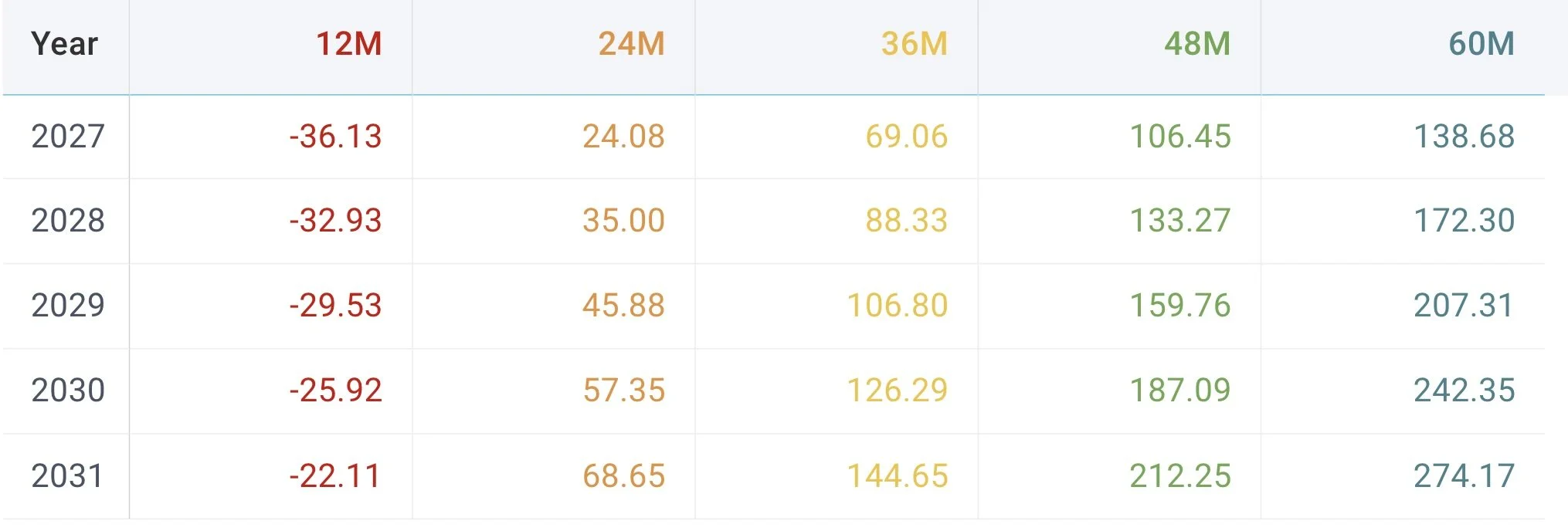
Acquisition costs are often incurred before much of the donor income arrives. Income then accumulates, while retention, gift value, donor development and ongoing costs shape the financial return.
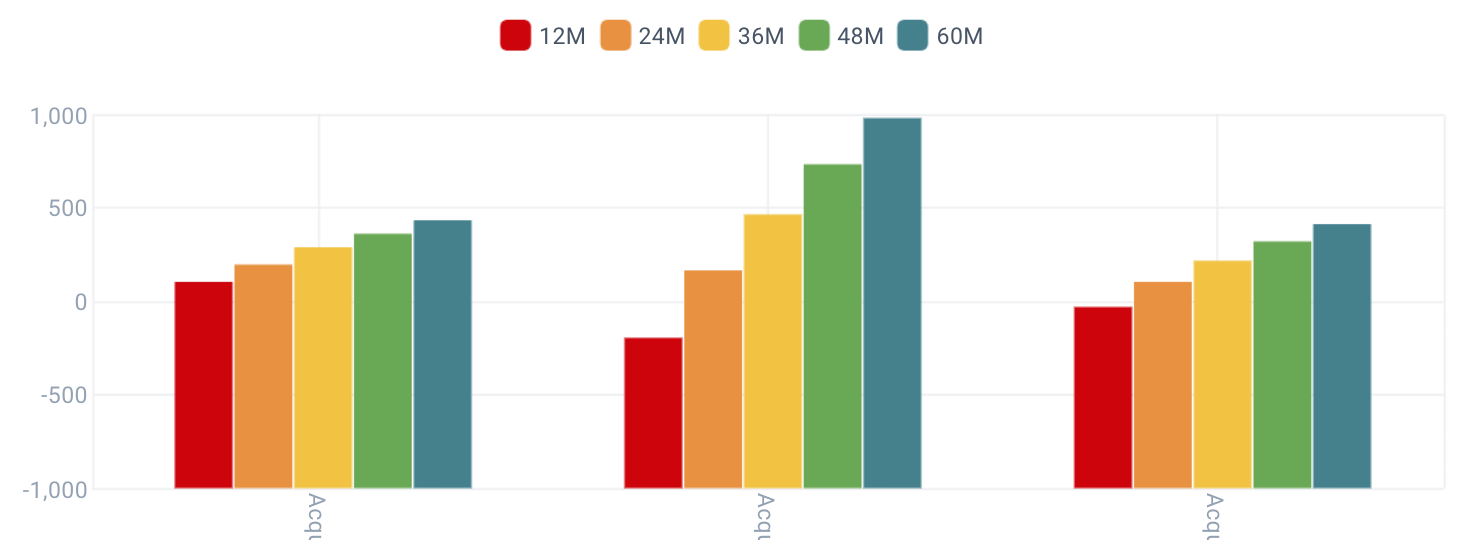
Forward shows how net income, ROI and LTV develop over periods from 12 to 60 months, per donor segment and investment year.
This helps you understand when an investment starts contributing net income and how that contribution develops over the following years.
Build a stronger case for investment
Compare how much investment different scenarios require, when it is needed and what net income it could generate over time.
Use those projections in discussions with Finance, leadership and your Board. Make the assumptions behind the expected return clear, including acquisition costs, retention and donor value.
The aim is to choose an achievable balance of growth, financial return and investment that builds sustainable net income for your mission.
Explore more of Forward
“Built by fundraisers, for fundraisers. That is very clear and a huge benefit!”